
Case Study: Reliable Compressed Air Upgrade for The Barber Institute of Fine Arts
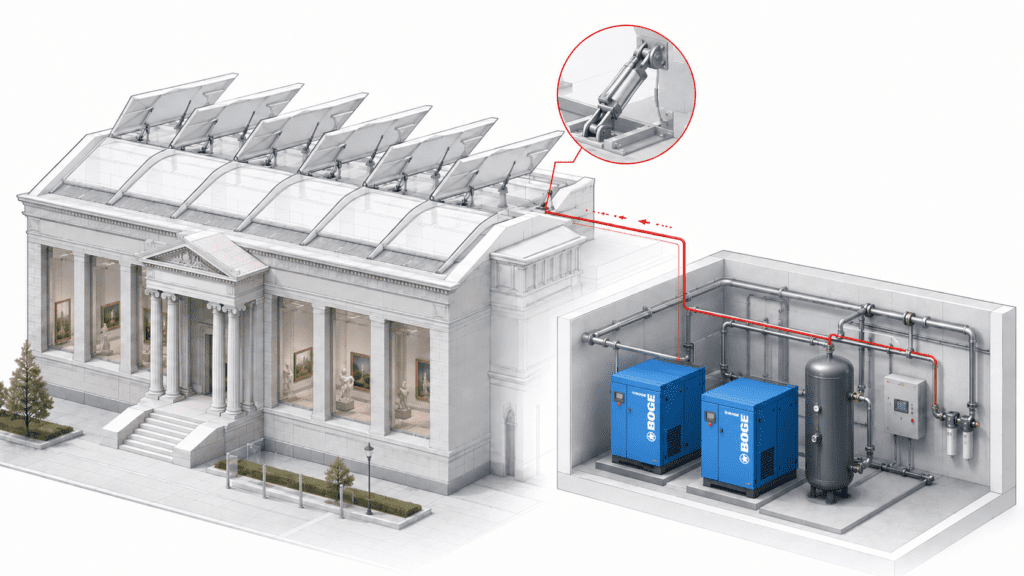
Reliable Compressed Air for Critical Gallery Ventilation
Aroplus helped The Barber Institute of Fine Arts improve the reliability, efficiency and resilience of its compressed air system by replacing overworked piston compressors with a modern BOGE screw compressor installation.
The project required more than a simple equipment swap. The compressed air system powered the roof-based ventilation controls protecting valuable artworks and supporting visitor comfort, so Aroplus had to design, install and commission the upgrade while the Institute remained open to the public. The result was a quieter, more reliable and more efficient compressed air solution with full standby protection.
Project Overview
The Barber Institute of Fine Arts, part of the University of Birmingham, relies on a roof-based ventilation system to help maintain suitable internal conditions for the gallery environment. The roof structure includes 48 opening panels controlled by pneumatic cylinders, with compressed air used to power the opening and closing mechanism. The system responds to external temperature changes to help regulate the internal gallery environment.
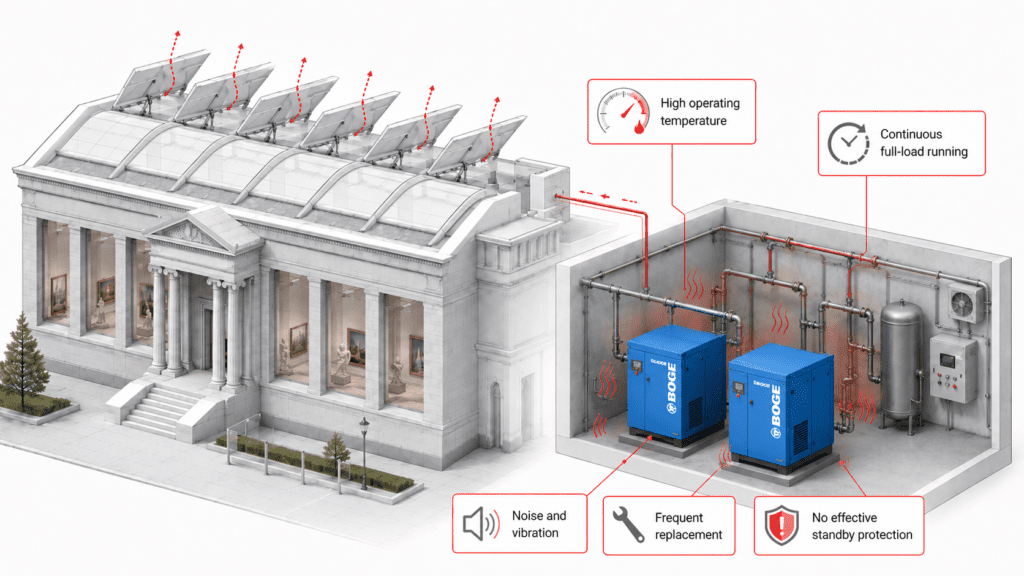
The existing compressed air supply was based on two piston compressors. These units were running under heavy load, creating reliability issues, high operating temperatures, excessive wear, noise and vibration. As the compressors supported ventilation control, failure could affect both artwork protection and visitor comfort.
Aroplus was recommended to the Institute after previously working with other departments at the University of Birmingham. The project required Aroplus to assess the existing installation, recommend a more suitable compressed air system, refurbish associated controls and complete the work without disrupting public access to the gallery.
The Problem
Overworked Piston Compressors
The existing piston compressors were not suited to the duty cycle required by the ventilation system. They were operating continuously at full load, with no effective duty/standby changeover. This led to high running temperatures, accelerated wear and repeated early failure. The original BOGE project report notes that the compressors typically needed replacing every 12 to 18 months.
For a gallery environment, this created several problems:
- Reduced reliability of the compressed air supply.
- Risk of losing control of the roof ventilation system.
- Potential impact on the internal gallery environment.
- Noise and vibration affecting rooms below the compressor location.
- Ongoing replacement and maintenance costs.
- Increased risk of damage to pneumatic valves and cylinders.
The location added further complexity. The compressors were positioned above one of the main galleries, so noise and vibration were especially noticeable. The work also had to be carried out within a Grade I listed building, where access, handling and disruption needed careful planning.
The Aroplus Solution
Correct Compressor Selection for the Application
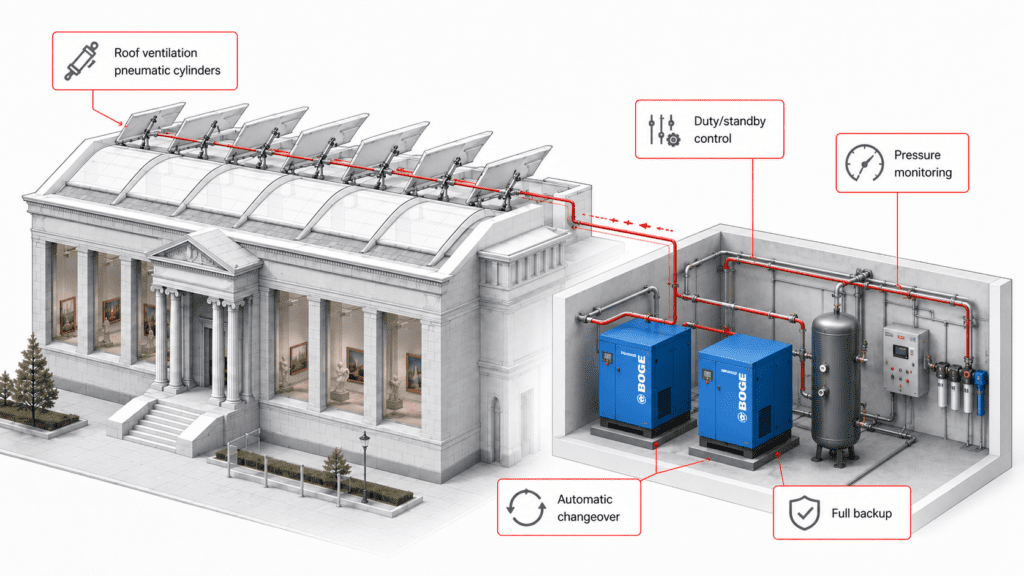
Following assessment of the system, Aroplus recommended replacing the existing piston compressors with two BOGE C4L rotary screw compressors, each rated at 3 kW, supported by a BOGE control unit. The new installation was selected to provide reliable compressed air for the ventilation system while reducing unnecessary runtime, improving resilience and lowering noise.
The key design change was moving from a stressed piston compressor arrangement to a screw compressor system better suited to continuous industrial duty. Each BOGE C4L compressor was capable of meeting the system’s air demand independently, allowing the installation to operate as a duty/standby system.
The BOGE control unit monitors system pressure and starts a compressor only when more air is required. Once the receiver is replenished and demand drops, the compressor can stop. This means the system responds to actual air demand rather than forcing the compressors to run continuously.
Duty/Standby Control
Aroplus configured the system so the compressors alternate duty and standby operation. The BOGE case study explains that one compressor runs for a set period while the other remains available, helping balance wear across both machines and providing full backup if one unit fails.
This was a major improvement over the previous setup. Instead of relying on overworked piston compressors with frequent failures, the Barber Institute gained a controlled, responsive and resilient compressed air system.
Control Panel and Pneumatic System Refurbishment
The project was not limited to compressor replacement. Aroplus also stripped down and refurbished the customised control panel linked to the roof-opening pneumatic cylinders. The project also involved staged removal, refurbishment and refitting of the pneumatic cylinders, helping maintain the operation of the ventilation system during the works.
This is an important part of the Aroplus contribution: the work combined compressed air equipment, pneumatic controls, site logistics and commissioning — not just compressor supply.
Project Delivery
Installation While the Gallery Remained Open
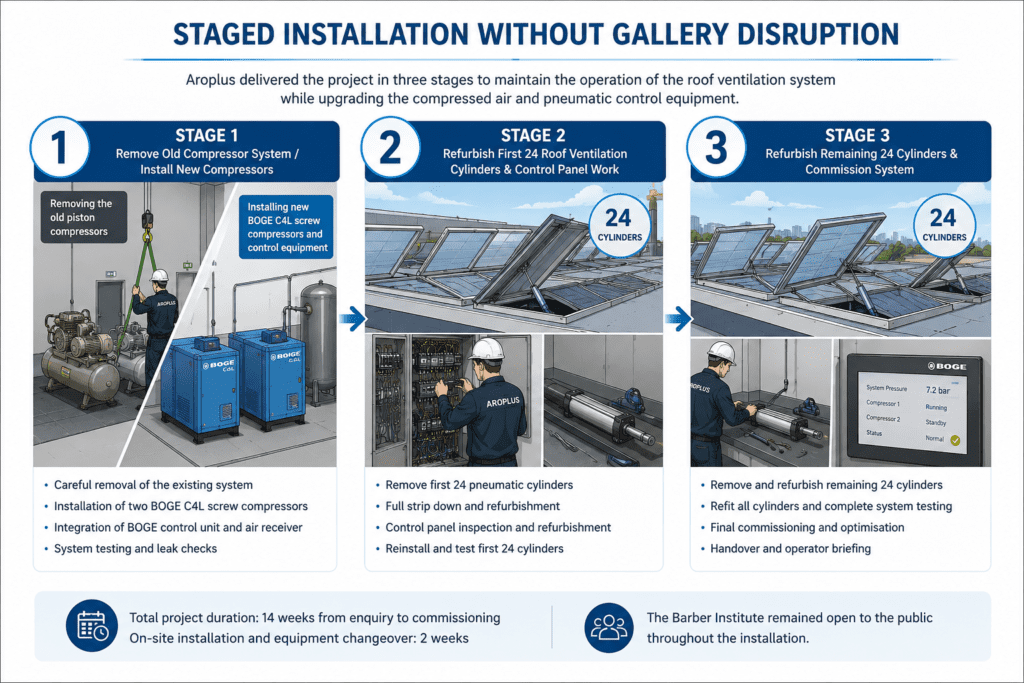
One of the main challenges was completing the upgrade without disrupting the Barber Institute’s public operation. The original BOGE report states that the full project took 14 weeks from initial enquiry to commissioning, with removal and replacement of the compressor system completed over a two-week period while the Institute remained open.
Access was also restricted. With no lifts available, the old equipment had to be dismantled into smaller sections and manually carried from the fourth floor to ground level. The new BOGE equipment then had to be dismantled, carried upstairs and reassembled in position.
Aroplus delivered the work in three stages to help maintain ventilation availability:
- Removal of the old compressor system while installing the new BOGE compressors and control equipment.
- Removal, refurbishment and refitting of the first 24 pneumatic cylinders and control panel work.
- Removal, refurbishment and refitting of the remaining 24 pneumatic cylinders, followed by final commissioning.
This staged approach helped protect building operation while allowing the compressed air and pneumatic control system to be upgraded properly.
The Results
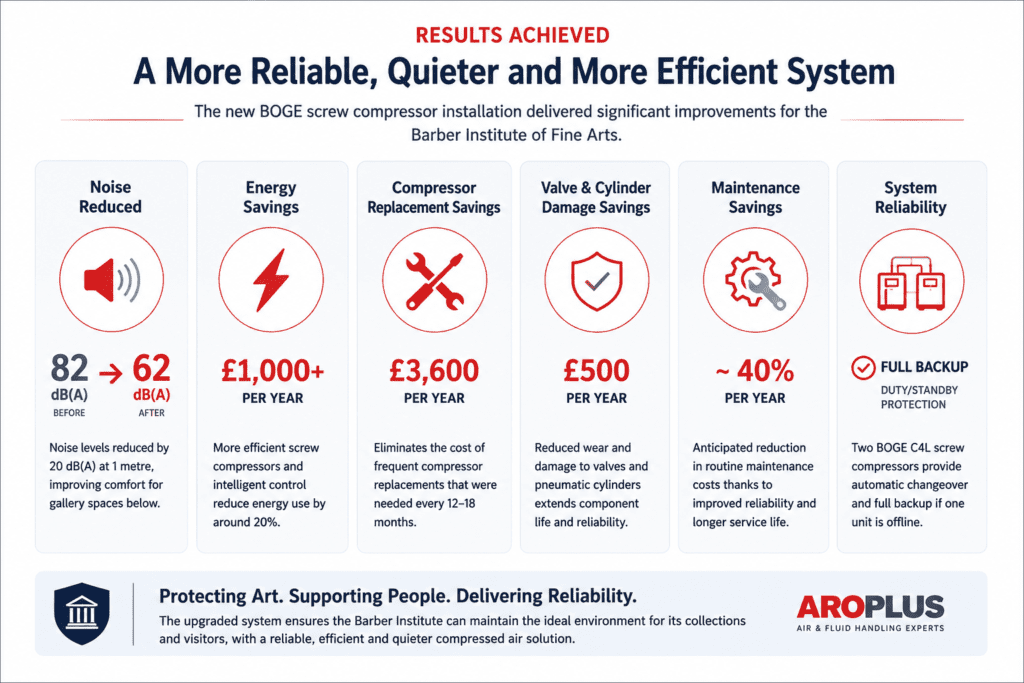
The completed system delivered significant operational improvements for the Barber Institute.
According to the BOGE project report, the new installation provided:
- Higher compressed air reliability.
- Full backup of the compressed air supply.
- Lower noise, reduced from 82 dB(A) to 62 dB(A) at 1 metre.
- Minimised vibration.
- Over £1,000 annual energy saving.
- Around £3,600 saved annually on compressor replacement costs.
- Around £500 annual saving from reduced valve and cylinder damage.
- Around 40% anticipated saving on routine maintenance costs.
The report also notes that energy consumption for the roof system was reduced by about 20%, supported by direct-drive screw compressor efficiency and improved control of compressor operation.
For the Barber Institute, the upgrade improved reliability and reduced the risk associated with a single overworked compressor arrangement. For Aroplus, the project demonstrates the value of application-led compressor selection, proper control strategy and careful site delivery in a sensitive building environment.
Why This Project Matters
This project highlights a common issue in compressed air systems: the installed compressor type may work initially, but still be wrong for the true duty cycle of the application.
At the Barber Institute, the original piston compressors were repeatedly failing because they were being asked to operate in a way that was not suitable for the application. Aroplus identified that the issue was not simply age or wear, but system suitability. By specifying a controlled screw compressor arrangement with duty/standby operation, Aroplus helped create a more reliable and more efficient long-term solution.
The result was a compressed air system better matched to the building’s requirements, with reduced noise, reduced running costs and improved protection against failure.
Aroplus Score of Work
For this project, Aroplus provided:
- Site assessment and compressed air system review.
- Compressor selection and recommendation.
- Supply and installation of two BOGE C4L rotary screw compressors.
- Integration of a BOGE control unit.
- Duty/standby control arrangement.
- Removal of the old piston compressor system.
- Refurbishment of the custom control panel.
- Staged refurbishment of 48 pneumatic roof ventilation cylinders.
- Manual equipment handling due to restricted access.
- Commissioning and handover.
- Delivery while the Institute remained open to the public.
Need a More Reliable Compressed Air System?
Aroplus supports industrial, commercial and specialist sites with compressed air system upgrades, compressor replacement, installation and service support.
Looking to Reduce Breakdowns or Running Costs?
We can assess your current installation and recommend the most suitable compressor arrangement for your site, duty cycle and air demand.
Compressed Air System Upgrades for Critical Applications
Compressed air systems often support more than production machinery. In many buildings and specialist environments, compressed air is used for ventilation controls, pneumatic cylinders, process equipment, control systems and essential site services. When the compressor installation is unreliable or poorly matched to demand, the wider system can become vulnerable to downtime, excessive noise, high maintenance costs and avoidable energy use.
Aroplus works with customers to assess compressed air demand, equipment suitability, control strategy and long-term reliability. In applications such as The Barber Institute of Fine Arts, this means looking beyond compressor replacement alone and considering how the complete compressed air and pneumatic system operates.
By selecting suitable equipment, improving control and planning installation around site constraints, Aroplus helps customers improve reliability, reduce operating costs and build compressed air systems that are better matched to real-world demand.
The Boge report confirms the challenge, Aroplus replacement work and reported savings/noise reduction.