



Pumps
Net Positive Suction Head (NPSH): What it is and How to Prevent Pump Cavitation
Oct
If you work with pumps — whether in water systems, chemical plants, or HVAC— you’ve probably heard the term Net Positive Suction Head (NPSH).
Understanding NPSH is essential to ensure your pump performs efficiently, avoids cavitation, and operates reliably over time.
In this guide, we’ll break down what NPSH means, the difference between NPSHa and NPSHr, and how to design your system for better pump performance.
🔍 What is Net Positive Suction Head (NPSH)?
Net Positive Suction Head (NPSH) is a measure of how much pressure is available at the pump’s suction compared to the liquid’s vapor pressure.
If the suction pressure drops too low, the liquid can boil and form vapor bubbles. When these bubbles collapse inside the pump, they cause cavitation—a destructive process that can:
Damage impellers
Create vibration and noise
Reduce pump performance
Lead to costly maintenance or downtime
⚙️ The Two Key Terms: NPSHa and NPSHr
There are two critical parts of the NPSH concept:
NPSHa (Available) and NPSHr (Required).
✅ NPSHa – Net Positive Suction Head Available
NPSHa is the actual pressure available at the pump suction.
It depends on several factors, including:
Atmospheric pressure
Static head (liquid level)
Friction losses in the suction piping
Vapor pressure of the liquid
👉 A higher NPSHa means the pump has more pressure available and is less likely to cavitate.
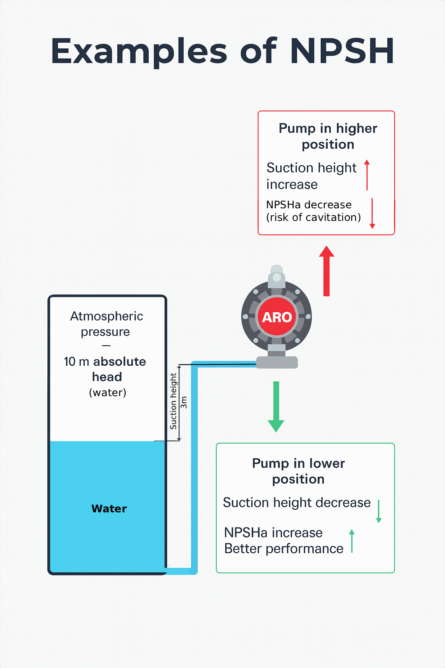
Example: Lowering the pump closer to the liquid source reduces suction lift, increasing NPSHa and improving performance.
⚙️ NPSHr – Net Positive Suction Head Required
NPSHr is the minimum pressure the pump needs to prevent cavitation.
It’s determined by the pump manufacturer and depends on the pump’s internal design and operating speed.
Note:
NPSHr increases with flow rate—the higher the flow, the more suction pressure is required to keep the liquid from vaporizing.
⚖️ The Golden Rule of NPSH
NPSHa must always be greater than NPSHr (plus a safety margin).
If NPSHa < NPSHr, cavitation occurs—causing vibration, damage, and poor performance.
💭 Quick Analogy
Think of Net Positive Suction Head as breathing space for your pump:
NPSHa is the actual air it gets.
NPSHr is how much air it needs.
If NPSHa falls short, the pump “chokes” and cavitates.
📊 Example: Pump Position and NPSHa
As shown above, the pump’s position directly affects NPSHa:
Pump in a higher position:
Suction height increases
NPSHa decreases
Cavitation risk increases
Pump in a lower position:
Suction height decreases
NPSHa increases
Better performance and reliability
💡 Tip: Position your pump as close to the liquid source as possible for optimal NPSHa.
📈 Understanding NPSHr and Flow Rate
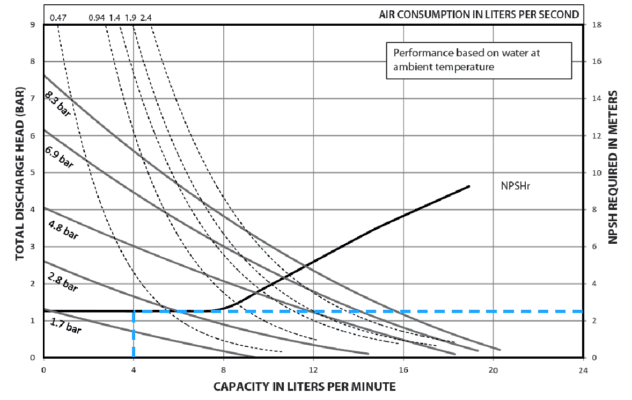
This graph shows how NPSHr (black line) rises with increasing flow rate.
At low flow, the pump requires less suction pressure, but as flow increases, the pump needs a higher Net Positive Suction Head to avoid cavitation.
🧾 Key Takeaways on Net Positive Suction Head (NPSH)
NPSH = Net Positive Suction Head – the pressure available above vapor pressure at the pump suction.
NPSHa (Available) – depends on your system setup.
NPSHr (Required) – specified by the manufacturer.
Always keep NPSHa > NPSHr to prevent cavitation.
Reduce suction height and friction losses to increase NPSHa.
Managing NPSH improves reliability and extends pump life.
🛠️ In Summary: Manage NPSH to Protect Your Pump
Understanding Net Positive Suction Head is one of the most effective ways to prevent pump cavitation and ensure long-term performance.
By ensuring your system provides enough NPSHa to exceed NPSHr, you give your pump the “breathing room” it needs to operate safely and efficiently.
Proper NPSH management means:
Less downtime
Longer pump life
Better performance and energy efficiency
Looking to keep your pumps running smoothly, Check out our ARO Pump Maintenance Guide
ARO Pump Maintenance: 2025 Guide to Keep Your Pumps Running
